Showing posts with label BTKW Culinary Heritage Recipes. Show all posts

Sunday, April 26, 2009

Doce de Ovos: The Sweet Soul of Portugal

In the March 2009 issue of Saveur Magazine there was a short article about an ever-shrinking town in Portugal called Tentugal. This sleepy little place was once an illustrious gastronomic center known for its local pastry specialty, Pasteis de Tentugal. These are little packages of thin, flaky pastry, that is made much like strudel or filo dough, wrapped around a filling of doce de ovos - a simple mix of egg, sugar, and water. It doesn't sound very impressive, but for some reason I was drawn to this simple sweet. I had never heard of Pasteis de Tentugal, or for that matter doce de ovos! Why was something so simple so important? I had to find out. Sadly, the article did not give a recipe, only the basic ingredients.

The history of this pastry, which has been made for 500 years, is inextricably tied to the town of Tentugal. The recipe is one of the many great convent sweets that this part of Portugal is known for. In the old days, the peasantry would bring offerings of eggs to the local monasteries and convents. The Religious would turn these eggs into a multitude of delicious sweets.

According to the article, a 9 pound lump of dough is placed on a clean sheet on the floor and pulled and stretched until you can read a newspaper through it. It can reach up to 300 square feet! The dough is then cut into circles and wrapped around a sweet egg filling.

I knew that the dough would take years of practice to master, but that there was bound to be a recipe for doce de ovos on-line. There were recipes, and they were in Portuguese! Luckily, with a basic knowledge of all Romance languages, I was able to decipher the recipes - despite the comical translations that you get when you click on the "translate this page" link options!

I assembled my ingredients and began to make doce de ovos. It is one of those recipes that you think can't possibly work until something magical happens and you end up with one of the greatest sweets the world has ever known. It is rich and decadent. It is versatile, not only good for a filling, but it can also be thinned out and used as a sauce or as a glaze for cakes and tarts.

To humbly replicate the Pasteis de Tentugal, I decided that I would cheat and wrap my filling in filo dough. It was good, but I'm sure it was a far cry from the true recipe. After doing more research, I discovered another sweet called Charutinhos de Doce de Ovos, which is actually closer to what I made. Who knew!?

Doce de Ovos
Makes about 1 cup
  • 1 cup granulated sugar
  • 1/2 cup water
  • 1 whole egg
  • 5 egg yolks
  • 1 teaspoon vanilla, optional*
  • 1 teaspoon orange blossom water, optional*
Place water and sugar in a medium saucepan over medium-high heat. Bring to a boil, insert candy thermometer, and continue boiling until sugar reaches 240 degrees. While sugar is cooking, whisk egg and yolks together in a metal or glass bowl.

Once sugar reaches 240 degrees, immediately begin to drizzle hot sugar into egg mixture, a little at a time, whisking constantly. Once all of the sugar has been added to the eggs, scrape eggs and sugar back into the same pot and return to medium-high heat. Return mixture to boil, whisking constantly. Be sure to get into the "corners" of the pot. Continue whisking until mixture begins to thicken and get foamy, about 5 minutes. After 5 minutes, scrape mixture into a clean bowl.

Allow to cool for 5 minutes, and add the vanilla and orange blossom water, if using. Whisk thoroughly to combine. Scrape sides of the bowl, cover with plastic, and refrigerate until completely cooled. Mixture will thicken as it cools. Thin with water if using as a sauce or glaze.

* These ingredients are not traditional, but make the doce de ovos even more delicious!

Sunday, December 21, 2008

Back To Basics: Frangipane Cream

Frangipane is that wonderful almond flavored cream that is the base for many fruit tarts. It is also used as a filling in breads, croissants, and the classic Gateau Pithivier. It has a rich bitter almond scent that brings Old World charm to any pastry.

The face of frangipane has changed a bit since Escoffier codified the ancient recipe in his magnum opus, The Complete Guide to the Art of Modern Cookery. In Escoffier's time, the rich pastry filling was made using crushed (almond) macaroon crumbs. Today, ground almonds or almond flour are more generally used in the recipe, since most of us don't have access to macaroon crumbs. The modern recipe is very good, but it lacks the sophistication of the original. Also, the original recipe clearly demonstrates the number one rule of the French Kitchen, WASTE NOTHING! If you have broken, not so nice, (or fresh) macaroons that you can't sell anymore, grind them up and turn them into something else!

Below I give two recipes for frangipane cream, a modern recipe and the classic recipe as it appears in Escoffier. Try them both if you feel like comparing them for yourself. If you do not feel like baking your own macaroons just to grind them up, you can probably find a bakery that will sell you old, broken cookies cheaply. Older cookies are easier to grind, anyway.

Creme Frangipane (Modern)

  • 4 ounces almond flour*
  • 4 ounces granulated sugar
  • 1 1/2 tablespoons all-purpose flour
  • 4 ounces unsalted butter
  • 2 large eggs
  • 1 tablespoon almond extract

Using a mixer, cream butter and sugar together. Add eggs one at a time, and mix until smooth and fluffy. Add almond flour, flour, and almond extract, and mix until well blended. Refrigerate at least 1 hour before using.

* If you can't find almond flour, grind 4 ounces of blanched almonds with the flour in a food processor until fine, but not pasty.

Creme Frangipane (Escoffier)

  • 9 ounces granulated sugar
  • 9 ounces all-purpose flour
  • 4 large eggs
  • 8 large egg yolks
  • 6 1/2 cups whole milk
  • 1 vanilla pod
  • small pinch of salt
  • 2 ounces crushed macaroons
  • 3 1/2 ounces unsalted butter

Bring milk to a boil and infuse with the vanilla pod. Place sugar, flour, eggs, yolks, and salt in a pan and mix together with a wooden spoon. Pour in the milk slowly, mixing well. Place on the stove and bring to a boil stirring all the time; allow to boil for 2 minutes then pour into a bowl. Add and mix in the butter and macaroons. Cover the surface with butter or plastic to prevent a skin from forming.

As you can see, this is a large recipe, so cut it in half if you want to. I just wanted to present it as it was written by the master. Happy Baking!

Sunday, November 9, 2008

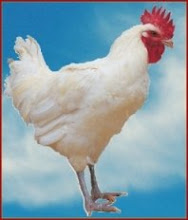
Back To Basics: Chicken Stock


Nothing is more basic to the great cuisines of the world than a good, flavorful chicken stock. It is the foundation upon which other great dishes are built. There is something magical about a pot of simmering stock. For me, the act of stock-making is almost a religious experience. The sights, sounds, and smells transport me back to when I was a child and would watch my mom make her delicious chicken soup. It was humble, but it was full of love and soul. It was comfort in a bowl. The key was the stock, carefully made and lovingly tended to.
Today, there are a multitude of ready-made "stocks" on the market. Some are fairly good, but most are little more than dirty water. In a pinch, they have their uses, but could never compare with a homemade stock. Bouillon cubes are nothing more than salt and really should never be used, for anything!
The following chicken stock recipe is the one that I use for most of my Western recipes. It is a classic French Chicken Stock, or Fond de Volaille. Once obtained, the basic stock can be used for soups, sauces, or wherever extra flavor and richness is needed.

Chicken Stock or Fond de Volaille
Makes 3 Quarts

  • 5 pounds chicken backs, necks, wings, or carcasses
  • 2 large yellow onions, roughly chopped
  • 3 celery ribs, roughly sliced
  • 3 carrots, roughly sliced
  • small bunch fresh thyme sprigs (7 to 10)
  • small bunch parsley stems (12 to 15)
  • 1 bay leaf, fresh if possible
  • 12 black peppercorns
  • 2 whole cloves or 4 whole allspice berries (my mom used allspice)
  • water to cover

Place the chicken pieces in a large stock pot. Fill pot with enough cold water to cover the chicken. Place on high heat and bring to a boil. Reduce heat to medium, and cook for 10 minutes. Pour chicken and water through a colander. Rinse chicken under running water to remove any clinging scum. Rinse out the pot!

Place chicken back into the pot along with all of the other ingredients. Fill with about 6 quarts of water. Bring back to a boil over high heat. Once pot begins to boil, reduce heat to low and allow to gently simmer for 4 hours. There should barely be any movement in the stock. Adjust heat to maintain the gentlest simmer. This will ensure that the stock will be crystal clear.

Skim off any scum that rises to the surface of the stock. If the stock seems to be evaporating too quickly, add enough water to just barely cover the ingredients.

After 4 hours, remove the stock pot from the heat and strain out the solids. Strain the stock through a fine sieve to remove any little particles. Cool the stock and then refrigerate overnight. The next day, you can remove the fat that has risen and solidified on top of the stock. Do not throw this fat away, you can use it to fry potatoes! Return stock to the stove and reduce it to concentrate the flavors. I recommend reducing it until you are left with about 3 quarts of stock. This will give you optimal flavor and cut your reduction time in any sauces that you make with the stock. Cool the stock and refrigerate.

Stock may now be stored in the refrigerator for 3 days, or frozen for up to 3 months.

Friday, October 24, 2008

BTKW Culinary Heritage Recipes


You may have noticed the new "BTKW Culinary Heritage Recipes" label attached to some posts. This is a new category of recipes that Beyond the Kitchen Wall will be compiling as an ongoing effort to preserve Culinary Traditions from around the World. The recipes with this label are the very essence of a Culture or a Cuisine. They are the basics, the treasures of our Culinary Heritage that should be preserved for all times. The loss of any one of these recipes would be a loss for all of Humanity. Please feel free to submit any recipes that you feel should be added to this archive, and explain why you feel that they define a people. Your help will be greatly appreciated! It's a big world out there, and we don't want to lose anything. Submit recipes to my E-mail which you can access through my profile. If you are a Facebook user, you can also find me there.

Wishing you all my best, and good eating,

Chef Dennis Wasko

Thursday, October 2, 2008

The Art of Confit

The Fall is my favorite time of year to cook. It is the season when I pull out all of my favorite Classic French recipes and techniques. The smell of hearty soups and stews just makes my heart sing. This is also the time of year that I start to think about making Confit. There is something magical about this ancient process. Simple poultry or pork is turned into one of the world's culinary treasures. The process is simple, but does require some time if the final product is to achieve its full potential.

Confit is traditionally made using goose. This tough, fatty beast makes an absolutely glorious confit. Duck is also traditional, as well as pork. Today in the Southwest of France, confit is made with chicken, turkey, and just about anything that can be preserved.

So what exactly is confit? The Larousse Gastronomique defines it as "a piece of pork, goose, duck, or turkey cooked in its own fat and stored in a pot, covered in the same fat to preserve it."
It is one of the oldest forms of food preservation that was developed in Southwest France to keep meat for the long, lean months after the fall harvest/slaughter.

Today, with modern refrigeration, one would think that making confit would be obsolete. That would be true except for one very important fact; confit is incredible. It is hard to describe this transformation. Let's just say that fatty, tough meat is transformed into a rich, concentrated, succulent taste sensation. The confit process gently removes water from the meat, thereby concentrating its flavors. The process also tenderizes the meat to an almost melting consistency. There is nothing else like it!

Traditionally, only the leg, thigh, and wings of poultry are used for confit as these are the tougher cuts. The breast does not take as well to confit as it tends to dry out. With pork, the tougher cuts are also used, shoulder, ribs, etc...

The method for making confit is quite simple. If you have not made your own confit, you should try it at least once to experience the magic of this process. Of course today you can buy confit in cryovac packages, but it is not the same.

Here is a simple method for making your own confit of duck. Don't be scared, just try it.

3 5 pound ducks
1/4 cup kosher or pickling salt
1 bunch fresh thyme
3 bay leaves
1 tablespoon black peppercorns

The first thing to do is to butcher the ducks. Remove the leg/thigh portion, wings, breasts, and any giblets. Trim all of the fat and skin from the carcass.

Pack up the breasts and giblets to use another day. All we are interested in is the fat, leg/thigh, and wings. Also, save the trimmed carcass to make duck stock. Nothing is wasted in French Cuisine!

Place all of the trimmed fat and skin into a large pot. Add cold water to cover and bring to a boil. We are rendering the fat and the water will help in this process. After all of the water evaporates, you will be left with pure fat. Lower the heat to medium and continue to cook until the skin pieces begin to turn brown. Let them get golden and crispy. Turn off heat, allow to cool for 20 minutes, and drain off fat. Be Careful, the fat is still quite hot. Put fat into a bowl and refrigerate. Save the duck cracklings, they are great in salads or with eggs. Nothing is wasted in French Cuisine!

While the fat is rendering, place the leg/thigh pieces and wings into a nonreactive container. Sprinkle with the salt, and add the seasonings. Mix together. Refrigerate overnight.

The next day, remove duck pieces and fat from the refrigerator. Place fat into a large pot being careful not to scrape in any of the liquid or sediment that may be at the bottom of the bowl. Place fat over low heat to melt.

Rinse duck pieces under running water to remove the salt and seasonings. Pat very dry with paper towels. Place duck into melted fat and increase heat until fat begins to just simmer. Maintain the fat at this gentle simmer. Cook the duck for 2 to 3 hours depending on how large the pieces are and how tough the duck.

To check if the duck is ready, poke with a thin knife or a skewer. If the knife goes in easily and the meat seems meltingly tender, the duck is ready. Be careful not to overcook or the duck will fall apart into the fat.

Transfer the duck pieces to a storage container and strain the fat over. The confit may now be used in your recipes, or enjoyed by itself . Confit begins to develop its full flavor character after about 1 month of storage.

Tuesday, September 23, 2008

Harira - Feeding The Soul of North Africa

One of the greatest soups in the world is the North African Harira. This soup, popular in Morocco and Algeria, is served at the break- fast meal in the evening during the Islamic Month of Ramadan. A hearty meal in itself, it soothes the body and nourishes the soul after many hours of intense fasting. Harira is also served for weddings, and other important family occasions.

There are many variations of this soup, but it basically consists of lamb, chick peas, lentils, onions, tomatoes, pasta or rice, and a multitude of fragrant spices. It is truly unique, and a soup worth exploring. Just one sniff of the fragrantly spicy pot will transport you to the streets of Morocco.

Harira
2 tablespoons olive oil or butter
1 pound lamb shoulder, cubed
3/4 cup carrots, diced
3/4 cup celery, chopped
1 yellow onion, chopped
1 red onion, chopped
2 pounds fresh tomatoes, roughly chopped
1 cup green lentils
1 pound soaked chick peas, or 1 15 ounce can chick peas
4 ounces vermicelli pasta, broken into small pieces
1 teaspoon turmeric
1 1/2 teaspoons black pepper
1 teaspoon ground cinnamon
1/4 teaspoon ground ginger
1/4 teaspoon cayenne pepper
7 cups water
1 bunch cilantro, chopped
1 bunch flat leaf parsley, chopped
juice of 1 lemon
2 large eggs, beaten
salt to taste
lemon slices for garnish

Place oil or butter, lamb, spices, carrots, celery, onions, and tomatoes into a large pot over medium-low heat. Stir for about 5 minutes, and then let simmer for 15 minutes.

Add water, lentils, and chick peas to the pot. Bring to a boil, then reduce heat to simmer and allow the soup to gently simmer covered for 2 hours.

About 15 minutes before serving, turn heat to medium-high and add the pasta or rice. Allow the soup to simmer for 15 minutes, or until the pasta or rice is cooked. Just before serving, add salt to taste, and add the lemon juice, beaten eggs, cilantro, and parsley. Mix thoroughly. Ladle into bowls, and garnish with lemon slice.

Sunday, September 7, 2008

Ful Mudammas - Egypt's National Dish


I have grown tired of the usual American breakfast fare. Eggs and bacon are great, and who doesn't love a good pancake? But let's face it, it's boring...

Sure, you can vary things. You can have oatmeal, farina, cold soggy cereal, sugary, fat-laden pastries, blimp- sized bagels, or a multitude of twigs, bark, and berries. All of these are commonplace, but even more boring. If breakfast is the most important meal of the day, why is it the least creative or exciting of the day's meals? I know that most Americans are very busy in the morning. We try to steal as much sleep as we can and then fly out the door for work. Who has time to be creative when your train is leaving in 20 minutes? There must be an interesting breakfast alternative that doesn't require a lot of morning preparation? There is!

Lately I have been eating breakfast the way the Egyptians do. I have Ful Mudammas. It is a simple preparation of small, dried fava beans, red lentils, onion, and tomato. This may not sound very interesting, but trust me, it is. The basic Ful is just a healthy, fiber-rich catalyst. The real magic is in the multitude of condiments that can be served with the Ful. I start my mornings with hot sauce, olive oil, and tahina. Sometimes I go for the fried egg option with kashk and sumac. Even a simple drizzle of salted butter raises the Ful to new levels of good!

Ful not only gets your tongue dancing, it is healthy, and will stick with you for most of the day. It is like throwing a big log on your metabolic fire. No quick burn and crash here, this stuff keeps you going strong. 80 million+ Egyptians can't be wrong!

Preparing Ful requires some planning. The beans must be soaked for 24 hours. The dish itself needs to cook for 12 hours. The good news is that you can make it in a slow cooker overnight. Then it is ready by breakfast time. Once made, the Ful can be stored in the refrigerator for up to a week, and reheated in the microwave as needed. The longer it sits, the better it gets!

Here is the recipe that I use. It is very traditional, but with a few personal touches. This recipe will make quite a large batch, so feel free to cut it in half if you need to.

Ful Muddamas

3 pounds small dried fava beans*, soaked overnight in the refrigerator

1 cup red lentils, rinsed

1 onion, chopped

2 tomatoes, chopped

2 1/2 quarts vegetable stock or water

1 tablespoon hot sauce (your favorite, optional)

1 tablespoon kosher salt (optional, traditionally Ful is not salted until served)


Place all ingredients into a slow cooker. Cook on High for 2 hours. Turn temperature down to low and cook for 10 hours. After 12 hours, check consistency. Ful should not be too thick. Add more liquid to make more "soupy". Serve in a bowl with your favorite condiments and plenty of whole grain flat-breads.

If you do not have a slow cooker, start Ful on top of stove in a heavy pot. Bring to a boil, cover, and place in a 200 degree oven for 12 hours.

Here are some of the traditional garnishes for Ful Mudammas, but feel free to try your own:

hot sauce, olive oil, tahina, hummus, tomato sauce, kashk, butter, garlic sauce, fried egg, hard-cooked egg, chick peas, green onions, and sumac.

* Small fava beans can be found in most Arab or Persian stores, or on-line.

In a pinch, you can substitute regular, brown lentils. This of course is not traditional, and probably will ruffle some purist feathers.